
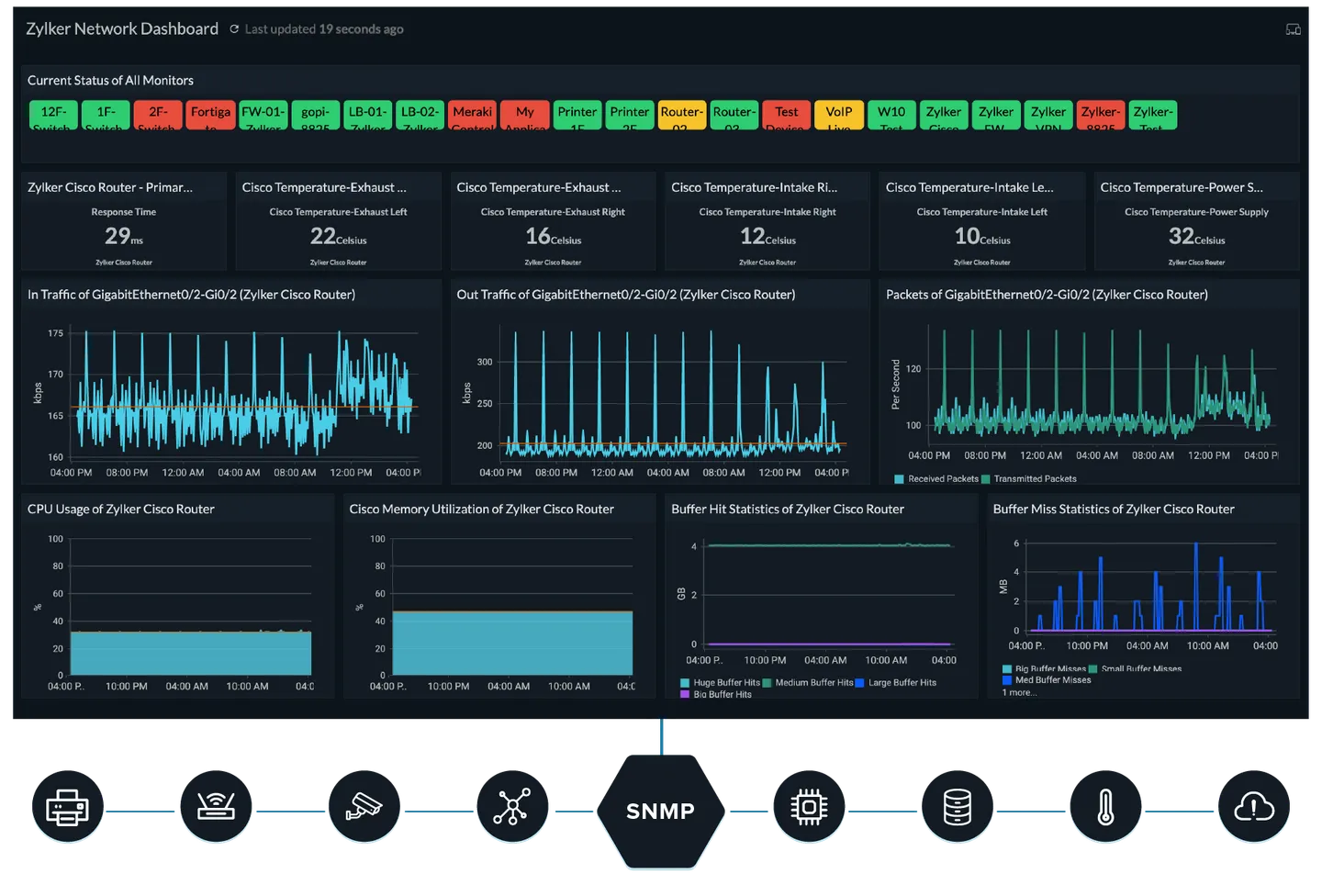
Connected technologies have transformed how organizations operate, communicate, and manage critical processes. Internet of Things (IoT) devices and operational technology (OT) systems are now used across manufacturing, healthcare, energy, transportation, logistics, and many other industries. While these technologies improve efficiency and visibility, they also create new security challenges. Organizations need effective monitoring strategies to understand what is happening across their connected environments and identify potential risks before they affect operations.
Understanding IoT and OT Network Monitoring
A network monitoring solution provides organizations with greater visibility into connected devices, network traffic, and system behavior. IoT monitoring focuses on connected devices such as sensors, cameras, smart equipment, and other internet-enabled technologies. OT monitoring focuses on industrial systems that control physical processes, including manufacturing equipment, industrial controllers, and other operational infrastructure.
Together, IoT and OT monitoring can help security and IT teams identify unusual activity, understand communication patterns, and maintain better visibility across complex environments. This visibility is particularly important when organizations have thousands of connected devices operating simultaneously.
Why Connected Environments Need Monitoring
Traditional IT environments are often easier to update, manage, and secure than industrial and IoT environments. Many connected devices, however, may operate for long periods and cannot always be replaced or updated quickly.
Some OT systems are also responsible for physical processes where downtime can have serious operational consequences. Monitoring allows organizations to observe activity without necessarily interfering with important processes.
By continuously analyzing network behavior, businesses can gain a clearer understanding of how devices communicate and identify activity that may require further investigation.
Improving Visibility Across IoT Devices
IoT environments can contain a large number of devices from different manufacturers. Each device may have different software, communication requirements, and security characteristics.
Without proper monitoring, organizations may not know exactly which devices are connected to their networks or how those devices communicate.
Network monitoring can help create better visibility by identifying connected devices, observing traffic patterns, and highlighting unexpected communication. This information can support device management and help security teams recognize potential weaknesses.
Protecting Operational Technology
OT systems require a careful approach to cybersecurity because they are often connected to physical equipment and critical processes. Security teams must balance protection with operational availability.
Monitoring can provide valuable information about communication between industrial devices and systems. Unusual traffic, unexpected connections, or changes in normal communication patterns may indicate a potential problem.
Instead of making unnecessary changes to sensitive equipment, organizations can use monitoring to observe activity and investigate potential risks while minimizing disruption to operations.
Detecting Unusual Network Behavior
One of the major benefits of monitoring connected environments is the ability to identify behavior that differs from established patterns.
For example, a device that suddenly communicates with an unfamiliar system, transfers an unusual amount of data, or begins communicating at unexpected times may deserve further investigation.
Behavior-based monitoring can help security teams identify these changes and determine whether they are normal operational activities or possible security incidents.
Identifying Unauthorized Devices
Unauthorized devices can introduce security risks to an organization's network. An unknown device may be incorrectly configured, outdated, compromised, or connected without proper approval.
Monitoring tools can help organizations identify devices that appear on the network unexpectedly. Security teams can then investigate the device, verify its purpose, and determine whether additional security measures are necessary.
Maintaining an accurate inventory of connected devices is an important part of managing modern IoT and OT environments.
Supporting Threat Detection
IoT and OT systems can become attractive targets for attackers because they may provide access to valuable information or critical operations.
Monitoring can help identify indicators of compromise, suspicious connections, unusual traffic, and other potentially harmful activities. When suspicious behavior is detected, security teams can investigate the event and take appropriate action.
Combining network monitoring with endpoint security, access controls, authentication, and other cybersecurity measures can provide multiple layers of protection.
Managing Remote Access
Remote access is increasingly common in modern industrial environments. Employees, technicians, vendors, and service providers may need remote connections to maintain equipment or troubleshoot problems.
Although remote access can improve efficiency, poorly controlled connections may create additional security risks. Monitoring can help organizations understand when remote connections occur, which systems are being accessed, and whether activity matches expected behavior.
Organizations should also use strong authentication and appropriate access controls to reduce unnecessary exposure.
Reducing Operational Risks
Security incidents in OT environments can potentially affect more than digital information. They may disrupt production, delay services, or interfere with physical processes.
Monitoring can help organizations identify problems earlier and provide security teams with useful information for investigation. Faster awareness can support more informed decision-making and potentially reduce the impact of incidents.
Regular monitoring can also help organizations understand normal operations, making unusual events easier to recognize.
Using Monitoring for Compliance and Reporting
Many industries have security, privacy, and operational requirements that organizations must meet. Monitoring can provide useful records of network monitoring solution and connected-device behavior.
These records can support security investigations, audits, risk assessments, and internal reporting. Organizations can also use monitoring data to identify areas where security policies or network configurations need improvement.
Maintaining useful visibility can therefore support both security and governance objectives.
Building a Layered Security Strategy
Network monitoring should not be treated as a complete cybersecurity solution by itself. Organizations should combine monitoring with network segmentation, strong authentication, access management, software updates, vulnerability assessments, backups, and employee awareness.
Segmentation can be particularly useful because it can limit communication between different parts of a network. If one device becomes compromised, appropriate segmentation may help prevent the problem from spreading to other systems.
A layered approach gives organizations multiple opportunities to detect and prevent security incidents.
Conclusion
IoT and OT technologies provide significant benefits, but their growing connectivity also creates new security challenges. Effective monitoring helps organizations understand their connected environments, identify unusual behavior, detect unauthorized devices, and investigate potential threats.
By implementing a reliable monitoring strategy alongside segmentation, authentication, access controls, and other security practices, organizations can improve visibility and strengthen their overall defenses. As connected environments continue to expand, proactive IoT and OT network monitoring will remain an important part of maintaining secure, reliable, and resilient operations.